A lifetime of blood tests, scans, specialist letters and wearable data — read by AI, trended over time, and kept on your own computer. Not the cloud. Yours.
Not a promise. The screens below are the real application, running on real records built up over decades. Start capturing early — for yourself, for a child, for an ageing parent — and nothing gets lost to the next clinic, portal or system change.
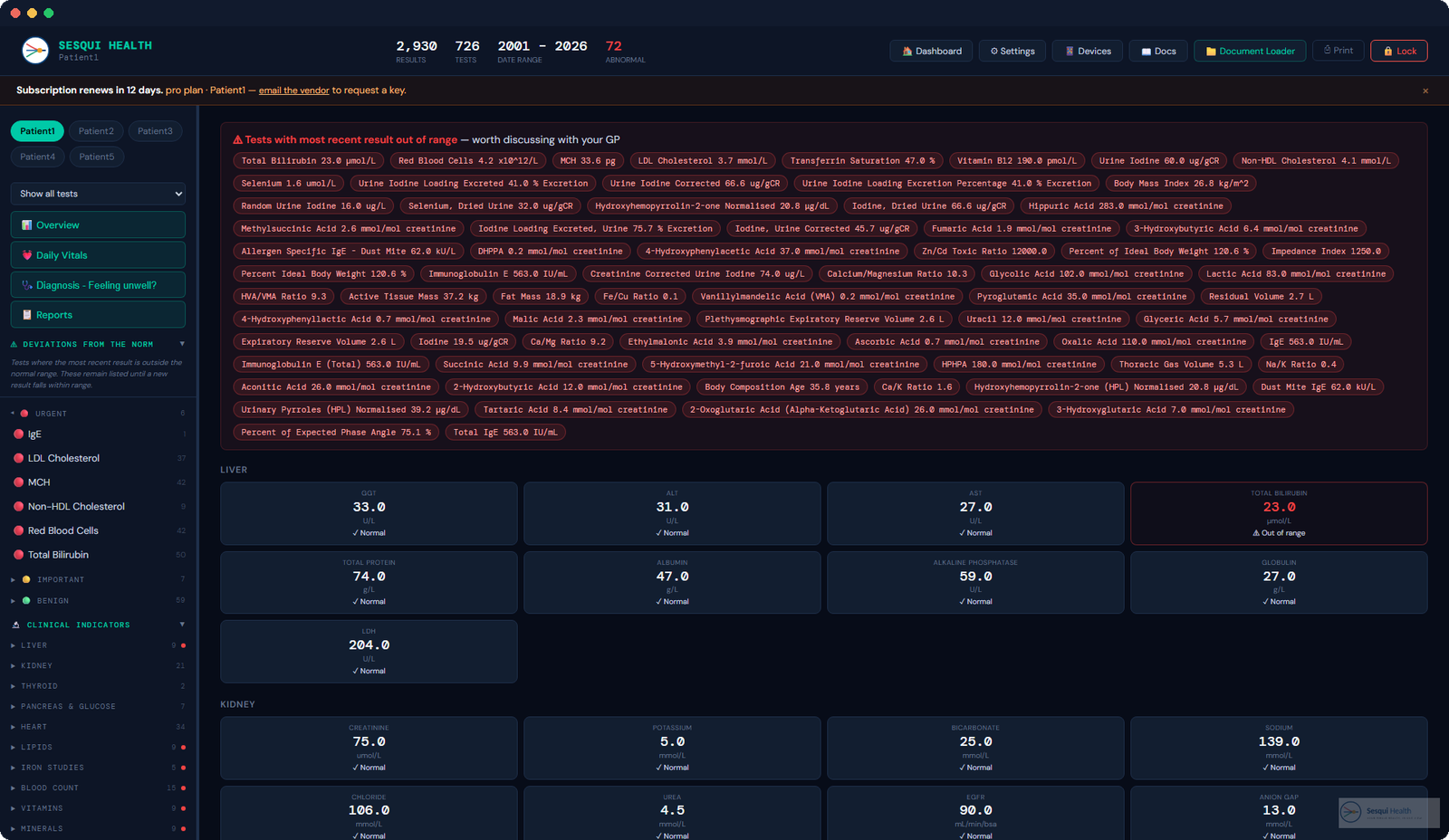
Every blood panel, every reading, every abnormal result — organised by body system and sorted so what needs attention rises to the top.

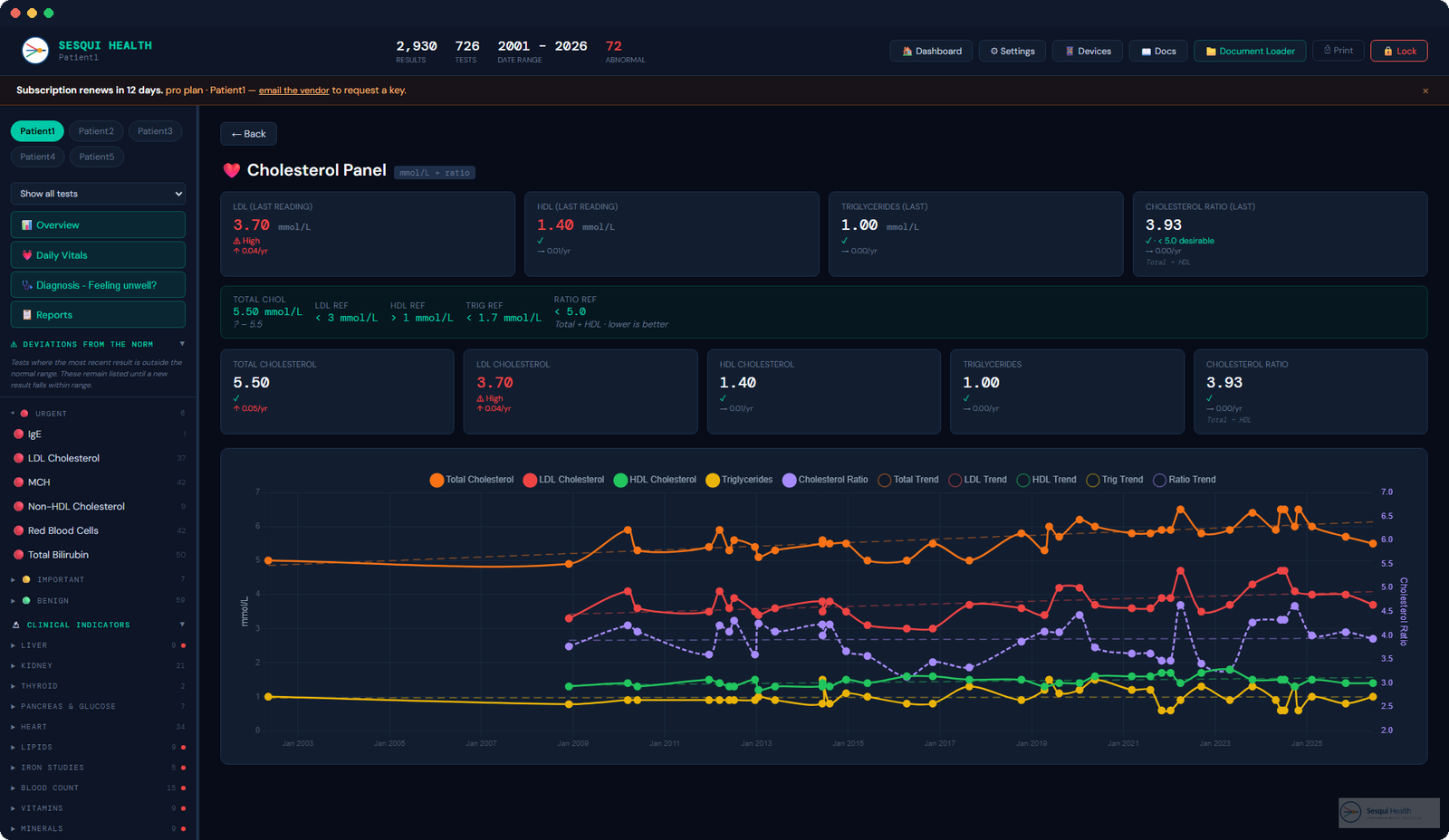
A single cholesterol reading tells you almost nothing. Twenty years of them, trended against the reference range, tells you where you're heading — and whether last change is working.

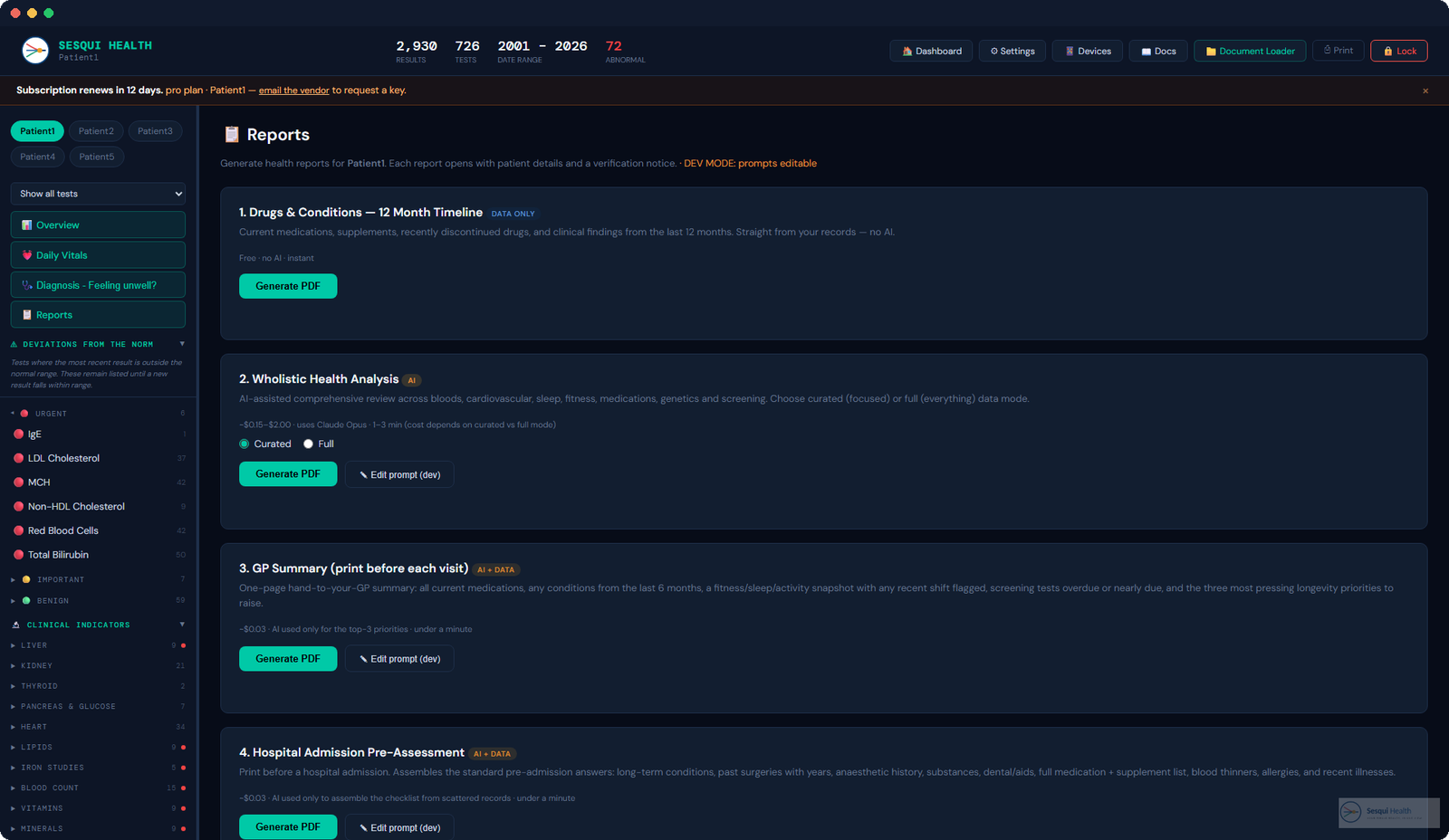
Generate a one-page summary for your GP, a full wholistic review, or a hospital pre-admission checklist — assembled from your own records, ready to print or hand over.

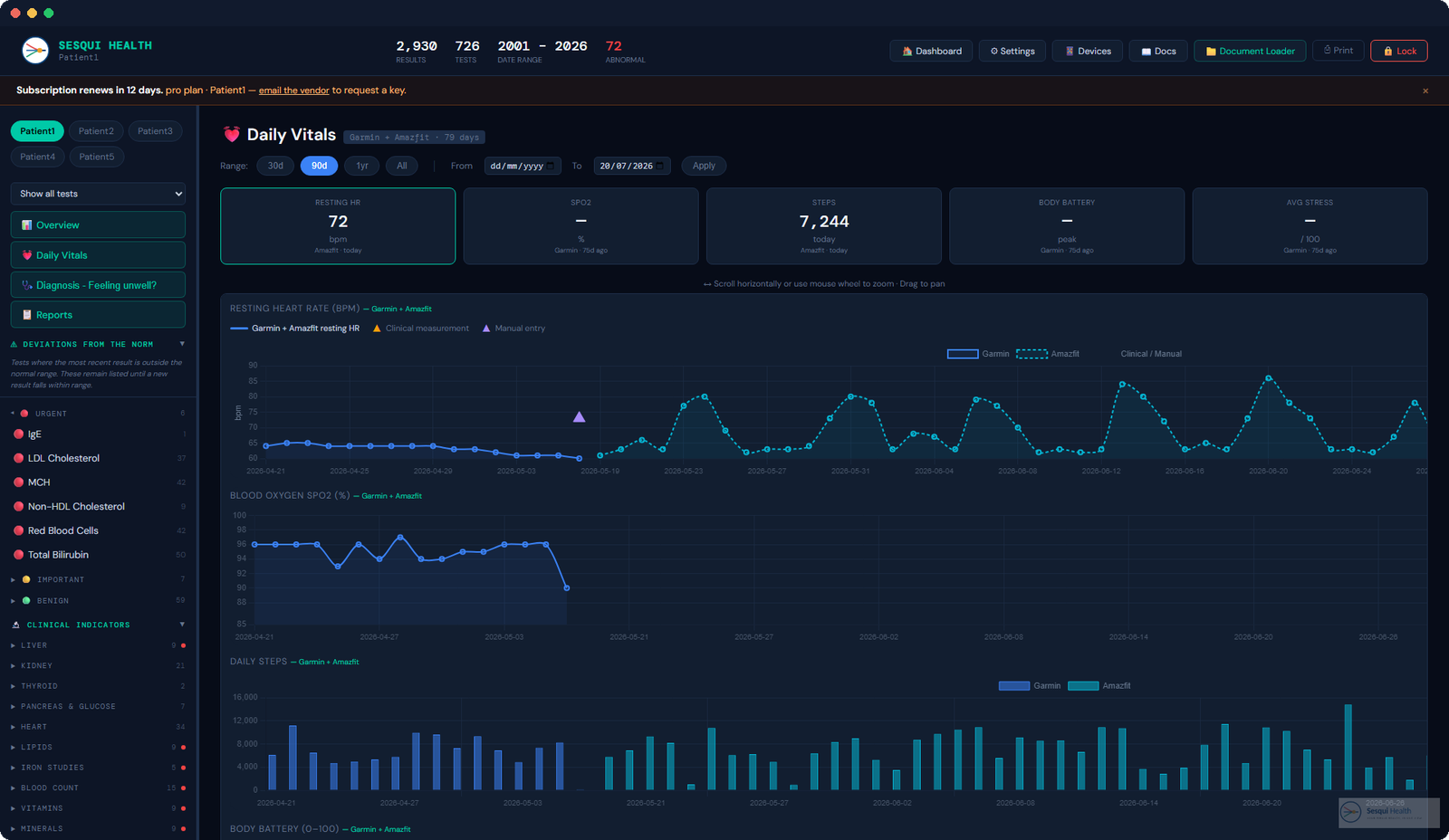
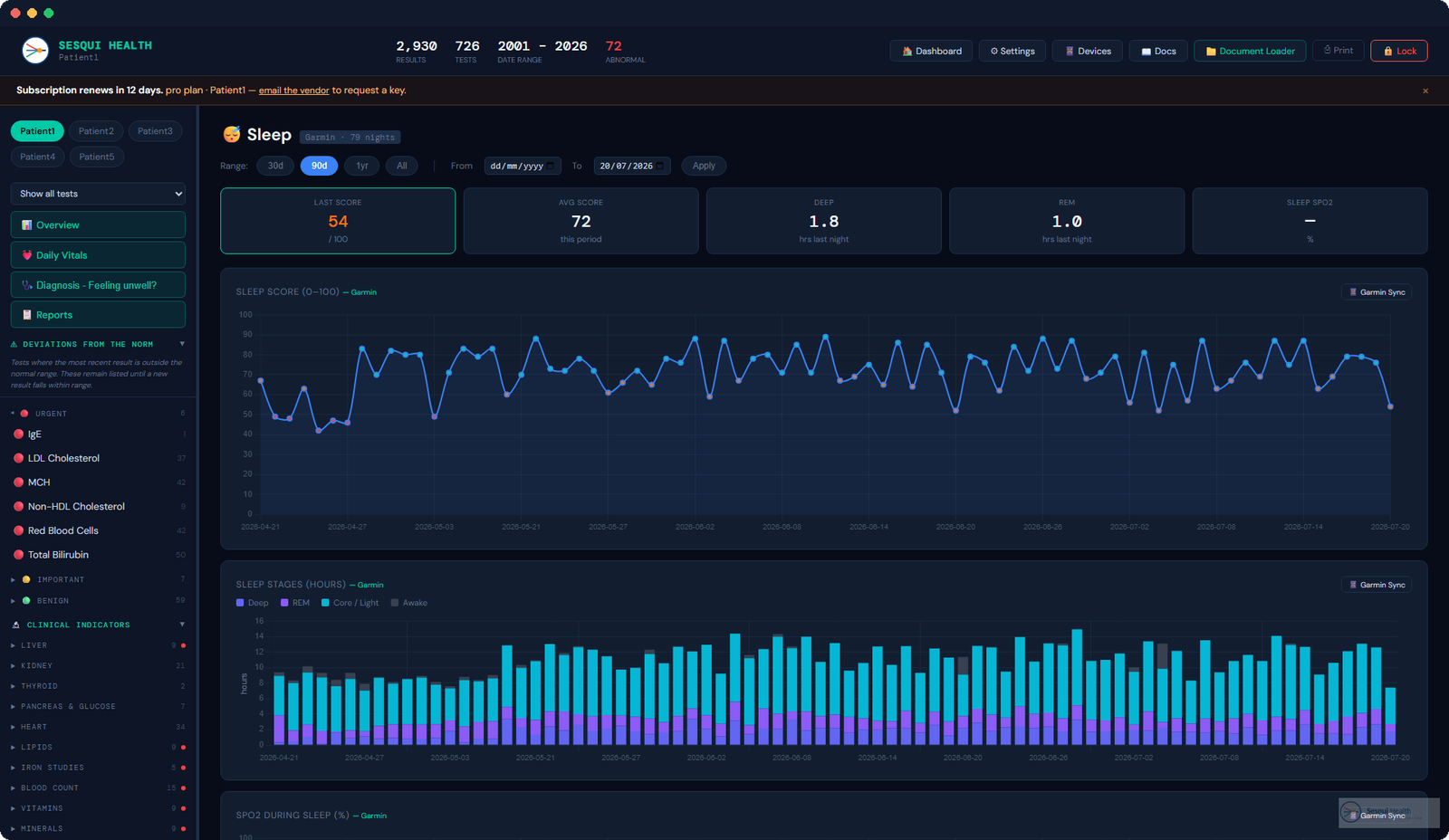
Resting heart rate, sleep, steps, SpO2, blood pressure — the near-live signals that lab tests miss — flow into the same record, next to your bloods.

Twelve connected views, one private record per family member.

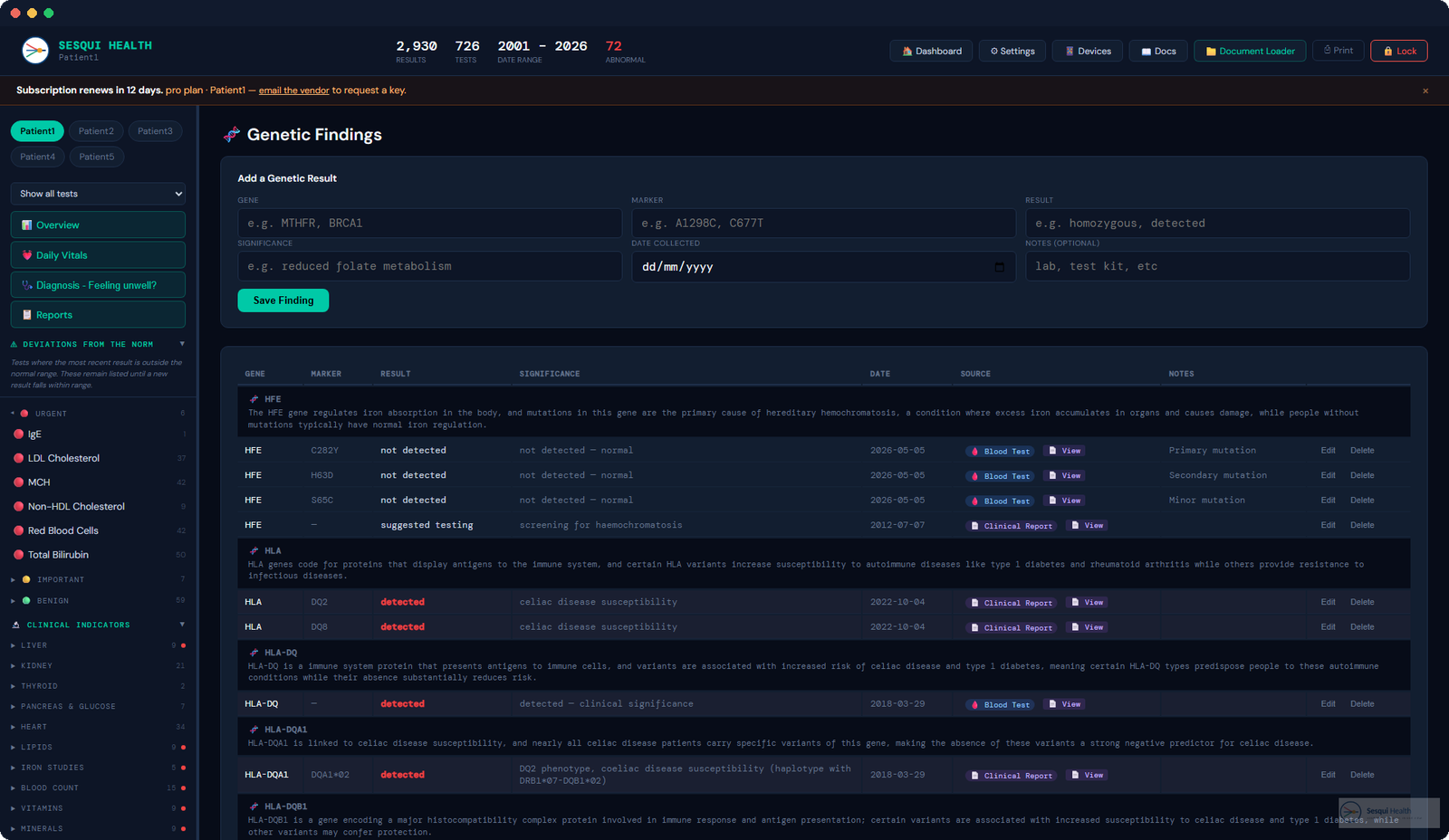
Gene variants captured, explained in plain language, linked to their source test.

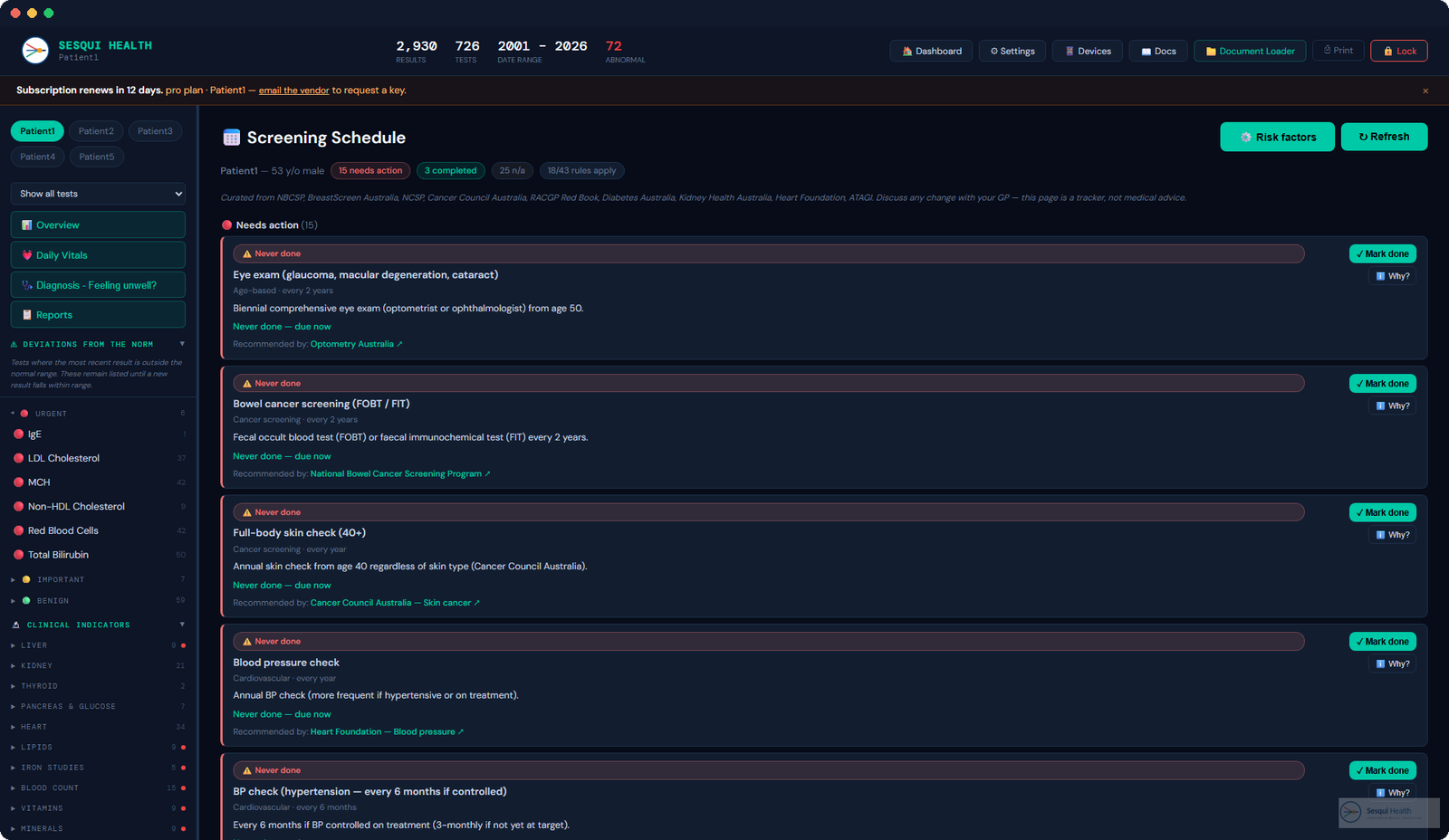
What's due, what's overdue — curated from Australian screening guidelines.

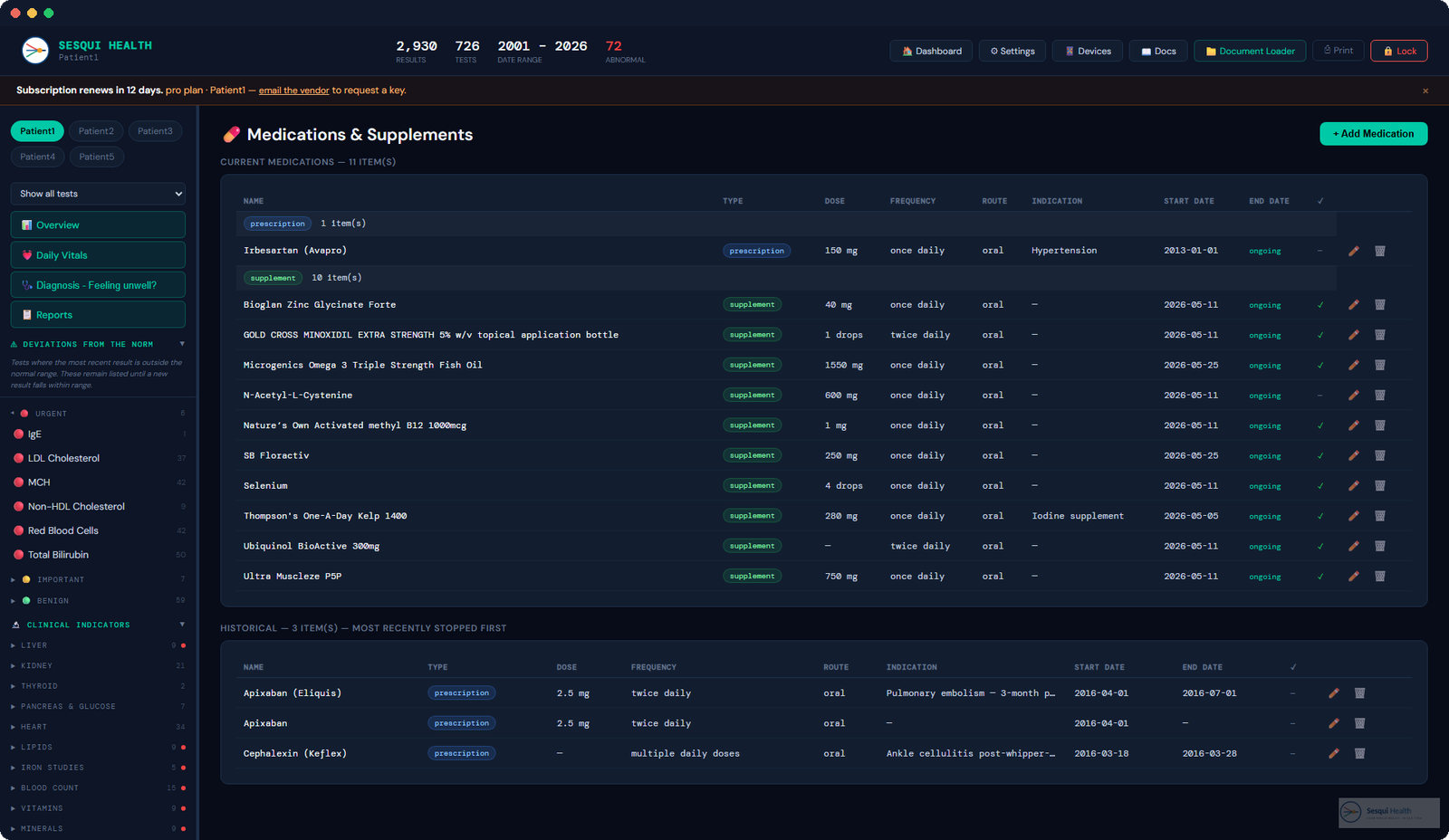
Current and historical, with dose, indication and start dates in one list.

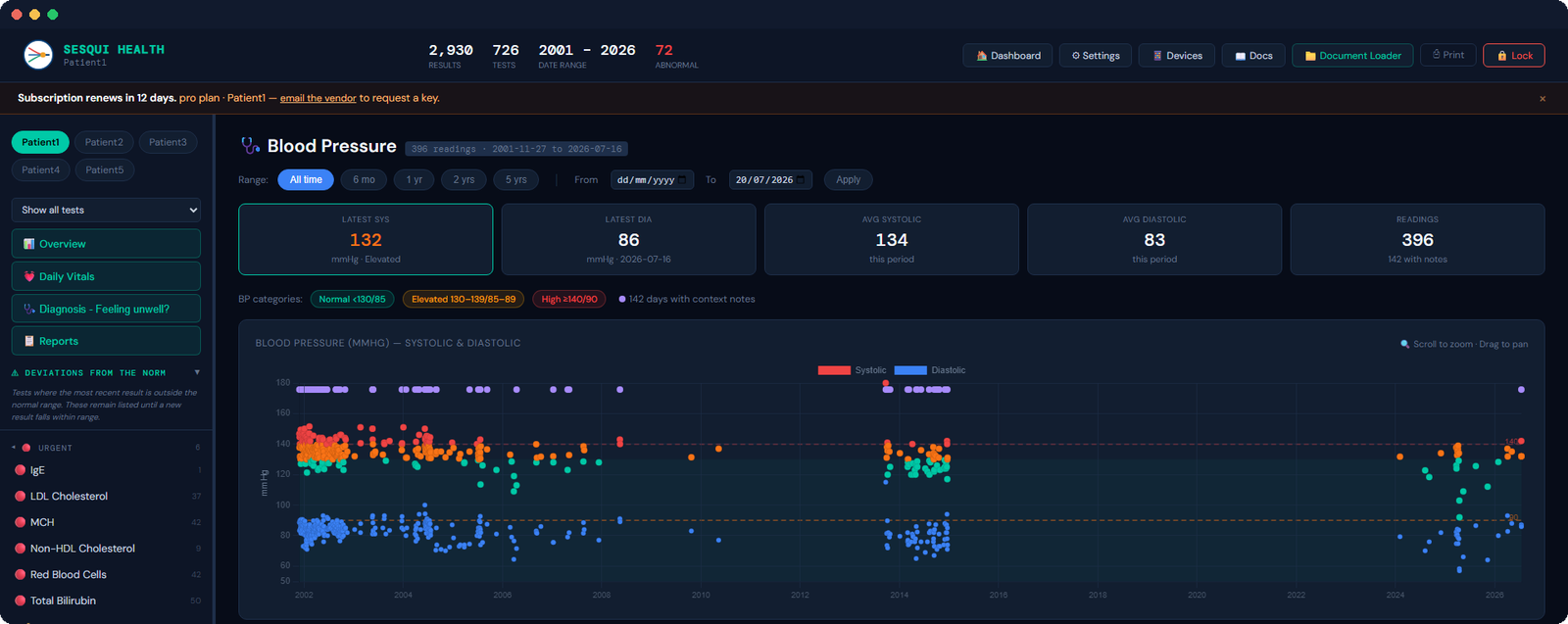
Hundreds of readings across decades, categorised and annotated.

Nightly score and stages, trended — the recovery signal behind the numbers.

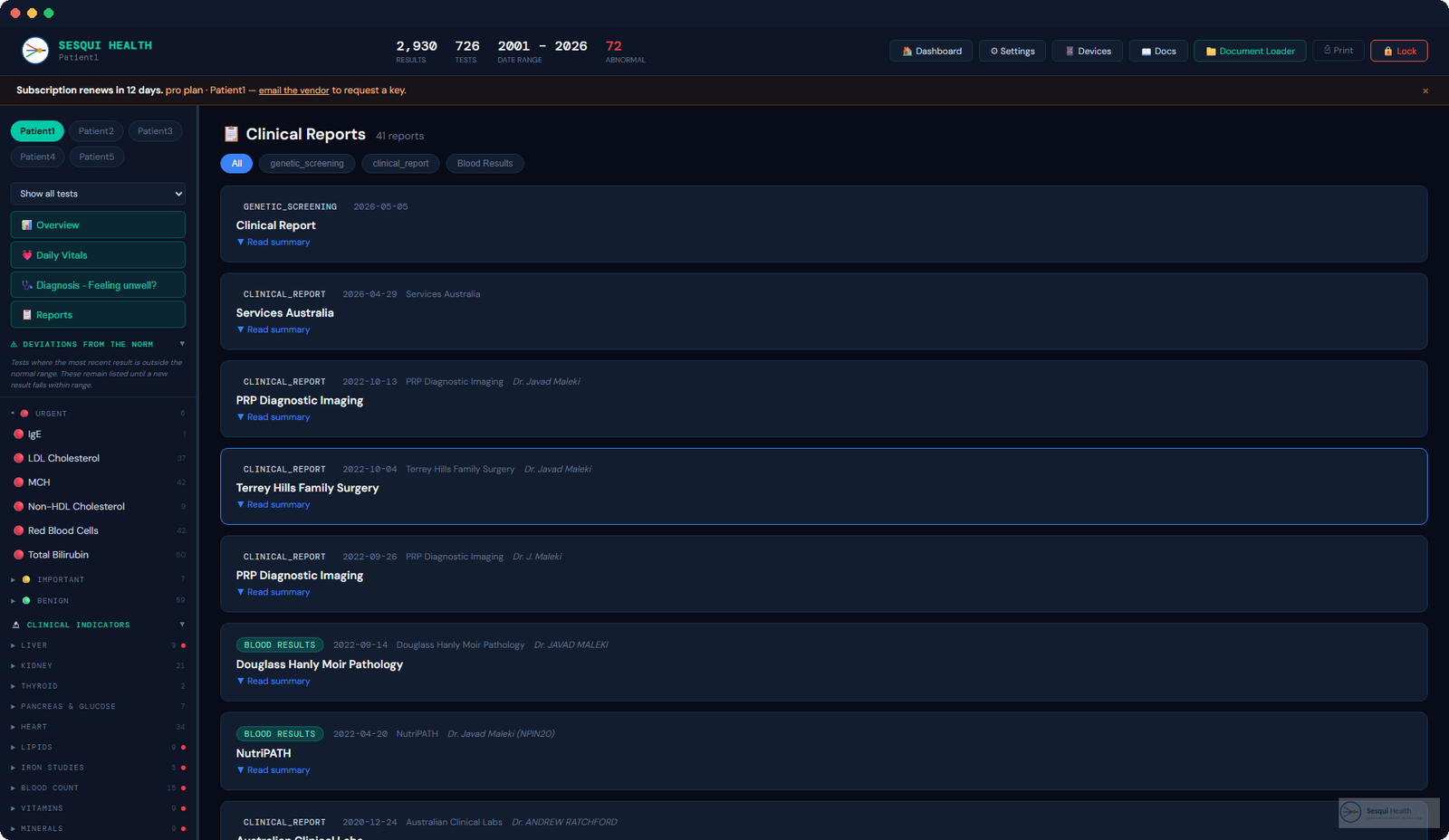
Every specialist letter and pathology report, searchable, with AI summaries.
In Australia, public hospitals and primary care are run by different levels of government, and they don't share with each other. Private labs, imaging clinics and portals each hold another piece. Every institution is a custodian of a fragment — but you are the owner, and until now there's been no tool built to let you hold all of it.
The dream of every GP, specialist and hospital seeing your entire history — every drug, procedure, diagnosis, plus your supplements, alternative treatments and near-live wellbeing data like sleep and activity — is real. It's also a very long way off.
Capturing your data early is the only thing that guarantees it still exists when that future finally arrives. The reading you don't save today can't be trended in fifteen years.
A single national store of millions of complete health records is the most valuable target imaginable — and if it's breached, ten million people lose their history at once, having had no say in how it was secured.
A record you hold yourself changes the maths. A breach of your own machine costs you your records; it can't cost a nation theirs. You decide where it lives, who sees it, and when it moves.
Sesqui Health isn't anti-doctor or anti-system — your GP stays at the centre of your care. It's the personal copy underneath: the one complete, portable record that follows you between clinics, survives every system change, and belongs to you rather than to whoever happens to be holding a fragment of it today.
Point it at your documents. It does the rest — and your whole health picture is always a click away.
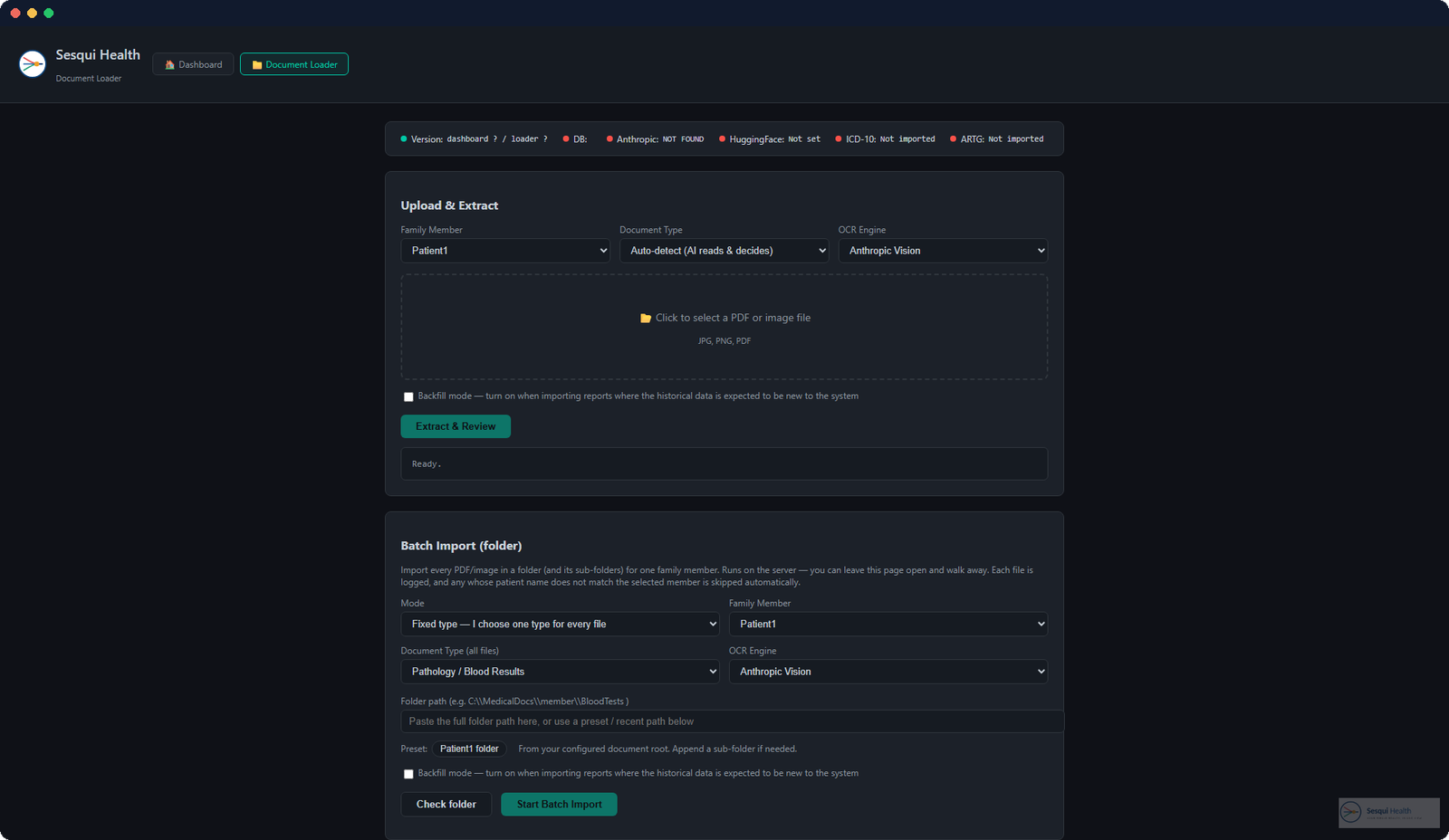
Point Sesqui Health at your folder of scanned PDFs. It reads each one with AI — pulling out values, dates, diagnoses and medications, and filing them into a structured record. Even years of messy scans become searchable.
Every result trends over time against its reference range. Out-of-range findings are flagged in red automatically. Wearables, blood pressure and glucose all flow into the same timeline.
Generate a doctor-ready report in seconds. When you visit a doctor, your entire history is on screen — no guessing, no gaps, nothing left in a folder at home.
The reason a shoebox of scans never becomes a health record is that reading them is unbearable work. Sesqui Health does that reading for you.

Fair question — it's the whole point. We wrote a plain-English page on exactly where your data lives, what touches the internet and what never does, and why holding it yourself is the safer choice.
How your data stays yours →Anyone whose health is too important to leave scattered across a dozen systems.
Keep every result, medication and appointment in one timeline you actually control — and see trends before they become problems.
Coordinate an elderly parent's care across specialists, hospitals and home carers — with aged-care and NDIS support tracking built in.
Begin capturing now and hand over a complete lifelong health record later — before decades of fragmented care can lose it.
No per-person fees, no upsells. One licence covers every family member, on your own computer.
Sesqui Health's AI features (reading your PDFs, writing reports, diagnosis search) run on Claude, made by Anthropic. To use them you create your own Anthropic API key, add a card, and pre-load a little credit at console.anthropic.com. Your key never leaves your PC — we never see it, route it, or take a cut. Estimates below are in USD (Anthropic bills in US dollars; ~1.5x in AUD) and use Sesqui Health's default models: Claude Opus 4.8 to read documents, Claude Haiku 4.5 to write reports.
| What you do | Typical cost (USD) | Notes |
|---|---|---|
| Import one 5-page report (e.g. a pathology or specialist letter) into Sesqui Health | ~$0.25 – $0.40 | Each page is read once by Claude Opus 4.8 Vision. ~$0.05–0.08 per page. |
| Import ten 5-page reports — 50 pages total | ~$2.50 – $4.00 | One-off. Once read, data is stored on your PC and never needs re-reading. |
| Import ten 5-page reports using the cheaper Claude Sonnet 5 OCR model | ~$1.00 – $1.50 | Switch the OCR model in Settings. Lower cost, slightly lower scan accuracy. |
| Generate a GP Summary or Hospital Checklist report | ~$0.02 – $0.05 each | Claude Haiku 4.5. AI only assembles the top-3 priorities / checklist. |
| Generate a whole-family Common Threads report (reads every member) | ~$0.10 – $0.40 | Scales with the number of family members and length of each record. |
| Generate a full Wholistic Health Analysis (Claude Opus, deep read) | ~$1 – $2 each | Most expensive report. The app enforces a cooldown so it can't be triggered by accident. |
| Diagnosis search (describe a symptom → ICD-10 matches) | ~$0.003 per search | Effectively free — Claude Haiku, tiny response. |
What a typical household actually spends: a one-off load of ~100–200 pages of historical records at import (~$5–$15), then a handful of AI reports across the year (~$5–$15). In practice most families spend $10–$30 (USD) a year on top of the licence — a small fraction of the $250. Trending, screening, red-flag alerts, wearables sync and all data-only views are free and use no AI at all. Costs are honest estimates, not guarantees — they depend on document density and the size of your record. Anthropic sets the per-token prices and may change them; check anthropic.com/pricing for current rates.
Book a demo and we'll show you your own records loaded into Sesqui Health — trended, flagged, and ready for your next appointment.
On your own Windows PC, in a single database file. Your records are never stored on our servers. Scanned documents pass through the Anthropic API once, during reading and extraction; after that, the structured data lives locally and stays there. Full detail here.
No. You download from your health portals as you normally would, point Sesqui Health at the folder, and review what it extracts. If you can save a PDF, you can build your record.
No — and deliberately so. Sesqui Health organises, trends and summarises your own records. Every report frames findings as worth discussing with your doctor. Your GP stays at the centre of your care.
One licence covers your entire household. Each family member gets their own private, structurally separate record — nothing is mixed or cross-shared unless you ask for it.
Your data is yours and it's on your machine — it doesn't vanish behind a paywall. A licence keeps the AI features and updates active.